Visiting timetableClosed
|Saturday, July 11, 2026Le Mont-Saint-Michel, 50170, Normandy, France
Back to tips
photography
Mont-Saint-Michel Photography – Reflections, Cloisters & Ethics
How to photograph Mont-Saint-Michel: reflection timing, cloister low-light settings, weather moods & ethical composition.
11/10/2025
12 min read
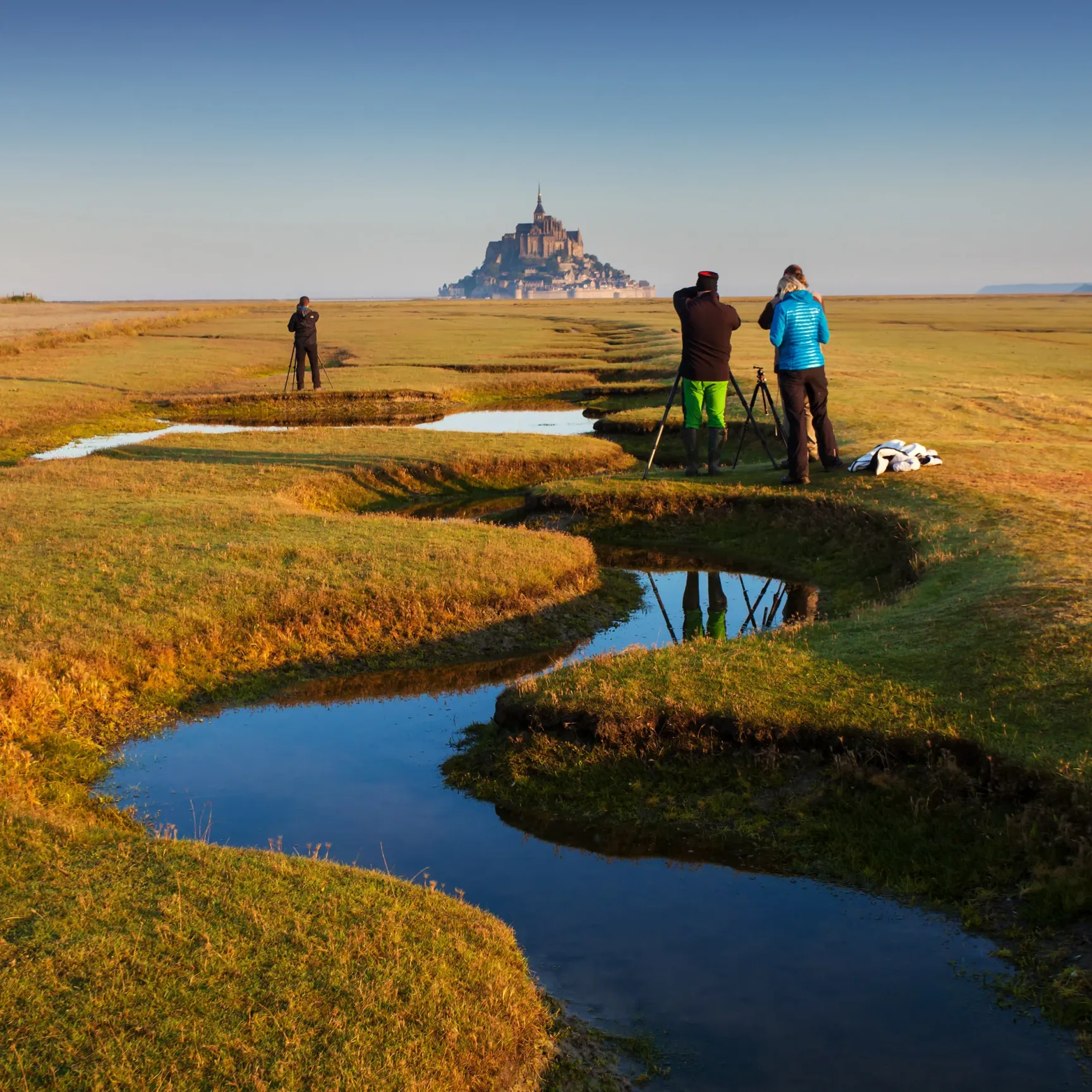
Tides turn Mont-Saint-Michel into a shape-shifting subject—anticipation beats raw gear.
1. Core Settings (Baseline)
- Exterior dawn: Aperture Priority f/8, ISO 100–200, tripod optional (be mindful of obstruction).
- Cloister: f/2.8–f/4, ISO 800–1200, 1/60–1/100 shutter; avoid flash (preserve ambiance).
- Rampart twilight: Manual; expose for highlights to keep silhouette drama.
2. Reflection Control
| Goal | Tide Phase | Technique |
|---|---|---|
| Mirror silhouette | Incoming mid-tide | Shoot low; wet sand acts like glass |
| Partial moat illusion | High tide | Slight elevation on causeway for unbroken water band |
| Marsh texture | Outgoing neap | Side light reveals ripples |
3. Managing Mixed Light Interiors
- Spot meter on mid-tone stone, not bright window—reduces blown highlights.
- Use gentle post-processing for shadow lift; maintain natural contrast.
4. Weather & Mood
- Fog: Softens edges → ethereal minimalism.
- Storm clearing: Backlit clouds produce dramatic spire halo.
- High wind: Skip tripod; embrace handheld high ISO.
5. Ethical Composition
- Respect worship / silence zones—defer shot if service underway.
- Avoid blocking narrow village lanes with gear setups.
- Drone use restricted/prohibited—check local regulations (often disallowed for safety & preservation).
6. Creative Prompts
- Sequence: causeway dawn → cloister geometry → tide shift midday → sunset silhouettes.
- Capture human scale: one figure ascending steps under towering walls.
Bottom Line
Read tide charts like a light schedule; patience with phases yields iconic yet respectful imagery.
About the Author

Travel Photographer
I wrote this guide to help you experience Mont-Saint-Michel with better timing, less stress and deeper architectural appreciation.
Tags
photography
tide reflections
low light
cloister
ethical
Comments (0)
Leave a Comment
Loading comments...